Real-World Deepfake Examples: History of Governments vs. Deepfakes
As deepfakes shift from a digital curiosity into a tool for geopolitical warfare and multi-million-dollar heists, the battle for the truth has moved to a new frontier. Discover the history of this digital arms race and how law enforcement and cutting-edge forensic tools are fighting back to secure our shared reality.
Key Takeaways
Synthetic media has evolved rapidly from 1990s academic research into an accessible, high-precision tool.
Deepfakes have transitioned from a social privacy threat to a top-tier corporate security risk. Organized crime now utilizes real-time audio and video cloning to bypass traditional corporate security.
Despite advanced detection tools being widely available, global enterprises are dangerously exposed. Over 80% of companies operate with zero internal protocols or defense frameworks.
Besides believing what is fake — the danger of deepfakes is also doubting what is real. The mere existence of synthetic technology allows bad actors to dismiss genuine evidence as AI-generated.
A robust defense requires a combination of strict regulatory frameworks and forensic-grade detection technologies.
Introduction: The Death of Seeing is Believing
In March 2022, a grainy video appeared on Ukrainian news websites and social media. In it, President Volodymyr Zelenskyy stood behind a podium, his voice heavy as he told his soldiers to lay down their arms and surrender to Russian forces. To a casual observer, it was a geopolitical earthquake. To the trained eye, however, the proportions were slightly off, the head movement stiff, and the voice just a fraction out of sync.
It was a deepfake — and it marked a terrifying first: the use of synthetic media as a frontline weapon in a major international conflict.
What is a Deepfake?
At its core, a deepfake is hyper-realistic synthetic media — video, audio, or images — where a person’s likeness, face, or voice is altered, replaced, or completely fabricated using artificial intelligence.
Current State of Deepfakes
For over a century, the photograph and the video were the gold standards of truth. If it was on tape, it happened. We are now witnessing the brutal collapse of that era. Thanks to LLM tools, anyone can create a convincing deepfake in seconds. Deepfakes have transitioned media from objective evidence to mere simulation.
This shift has birthed two modern psychological phenomena:
Reality Apathy: When the public becomes so overwhelmed by fakes that they stop believing anything at all — even the truth.
Information Apocalypse: A state where the "liar’s dividend" reigns supreme; if a politician is caught in a real scandal, they can simply claim the footage is "AI-generated" to escape accountability.
As we move forward, we aren't just fighting bad code; we are fighting for the very concept of shared reality. To get to the bottom of this, let’s recap the history of deepfakes, the neverending battle between deepfakers and governments and our current tools to recognize the islets of truth in the ocean of fakes.
The Genesis of Synthetic Media (1990s – 2017)
Before deepfakes became a household name and a geopolitical headache, they were a quiet pursuit of academic curiosity. The journey from cool tech demo to global security threat happened in three distinct waves.
Academic Roots: Lip-Syncing and the Birth of GANs
The ability to manipulate digital faces and voices didn't appear overnight. As early as 1997, researchers developed the "Video Rewrite" program. It was the first system to automate the re-lipping of a person in a video to match a different audio track. It was impressive for the 90s, but it required hours of manual oversight.
The real Big Bang moment occurred in 2014, when researcher Ian Goodfellow introduced Generative Adversarial Networks (GANs). This was the breakthrough that removed the human editor from the equation.
Think of a GAN as an artistic duel between two AI algorithms:
The Generator: Its sole job is to create a fake (e.g., a video of a world leader) that looks as real as possible.
The Discriminator: Its job is to spot the fake.
They loop millions of times, the Generator learning from every fail the Discriminator gives it, until the resulting image is so convincing that even the Discriminator can no longer tell that it’s fake. This isn't simple Photoshopping; it is the algorithmic orchestration of reality.
Suddenly, the computer wasn't just editing a video; it was dreaming up pixels that didn't exist, with a level of fidelity that started to bypass the human "uncanny valley" response.
The Dark Deepfake Debut on Reddit
For a few years, this tech remained trapped in high-end research labs. That changed in late 2017. An anonymous Reddit user, sporting the handle "deepfakes," took these academic algorithms and applied them to a much more sinister use case: swapping celebrity faces into adult content.
This user also released the source code and user-friendly tools that allowed anyone with a decent graphics card to do the same.
This was the moment the term deepfake was born — a portmanteau of "deep learning" and "fake" — and it cemented the technology’s early reputation not as a tool for art or film, but as a weapon for non-consensual synthetic media.
Do you want to know more about what deepfakes are and how to spot them before it's too late? We cover these topics in a separate article.
Early PSAs and Law Enforcement Warning
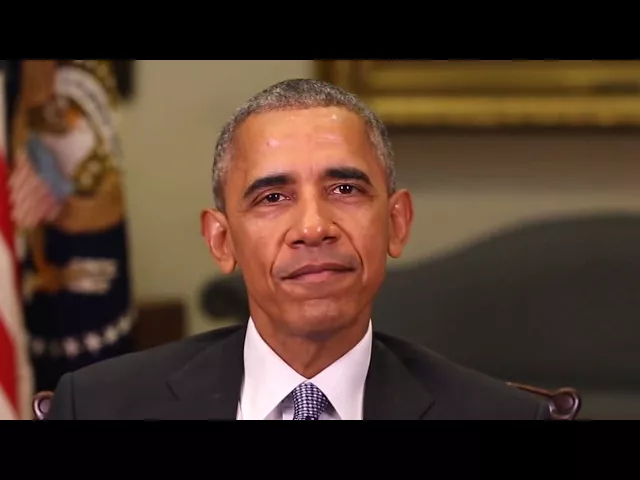
As the tech leaked into the mainstream, creative and proactive warnings began to emerge. In 2018, filmmaker Jordan Peele, in collaboration with BuzzFeed, released a viral PSA featuring a deepfaked Barack Obama. The video used facial reenactment to show the former President saying things he never said, concluding with a stark warning about the fragility of democratic discourse.
The warning was heard. By early 2018, the sheer volume of AI-generated sexual abuse material (often referred to as "NCII" or non-consensual intimate imagery) became impossible for authorities to ignore. This marked the first time law enforcement and digital platforms had to move beyond traditional copyright or harassment filters.
In February 2018, Reddit issued a landmark ban on deepfake pornography, followed quickly by platforms like Twitter and Pornhub. This was a pivotal moment in the fight. It forced a realization among regulators: we weren't just dealing with fake news or bad Photoshop. We were dealing with a new category of AI-generated abuse that required entirely new legal frameworks and detection methods.
The "Wild West" era was over, and the battle for the truth had officially begun.
First Blood: The Era of Uncertainty (2018–2021)
By 2018, deepfakes migrated from the dark corners of the internet (no offense, Redditors) into the halls of power and the ledgers of global finance.
This era proved that synthetic media wasn't just a threat to privacy — it was a threat to national stability and the global economy.
The Gabon Coup: The Liar’s Dividend in Action
In late 2018, Gabon’s President Ali Bongo had been out of the public eye for months due to a stroke, fueling rumors about his health. To quell the unrest, the government released a New Year’s video of the President. But something was wrong: his blinking was irregular, his movements were stiff, and his speech felt off.
The opposition immediately labeled it a deepfake. A week later, the military launched a coup attempt, citing the "fake" video as proof that the President was unfit or already dead. Ironically, most experts now believe the video was likely authentic — just poorly edited or showing a man recovering from a stroke.
This became the textbook example of the Liar’s Dividend. The mere existence of deepfake technology allowed critics to dismiss a real video as a fake, creating enough uncertainty to nearly topple a government. It proved that in the age of AI, the truth doesn't have to be deleted; it just has to be doubted.
The First Financial Heists with Deepfakes
While politicians were grappling with video, organized crime was mastering audio. In 2019, the CEO of a UK-based energy firm received a call from what he thought was his boss — the chief executive of the firm's German parent company. The voice was perfect: it had the right German accent, the right melody, and the right sense of urgency.
The “boss” ordered an urgent transfer of €220,000 to a Hungarian supplier. The CEO complied. It was only when the scammers called back for a second transfer that the ruse collapsed. This wasn’t a standard phishing scam. It was the first high-profile use of AI voice cloning for serious financial crime. It signaled a pivot: deepfakes were no longer just about social harm; they were a scalable, high-ROI tool for international syndicates.
Why do people fall for deepfakes? We explore this topic thoroughly in our article about the psychology of deepfakes and AI scams.
Initial Legislative Responses: Drawing the Line
As the stakes rose, governments finally stopped watching from the sidelines.
The Deepfake Report Act of 2019 (U.S.): This was a foundational move at the federal level. Rather than jumping straight to bans, it mandated that the Department of Homeland Security conduct a massive, annual study on the state of digital forgery and its threats to national security.
The State-Level Pioneers: In 2019, Texas became the first state to officially ban deepfakes intended to influence elections. California followed shortly after with AB 730, which prohibited the distribution of "materially deceptive" media of candidates within 60 days of an election.
Human ears can’t spot deepfakes anymore. Download our free whitepaper for cross-industry blueprints to secure your network.
Weaponized Reality: Elections and War (2022–2026)
By 2022, the lab experiment phase of deepfakes was officially over. We entered an era where synthetic media became a high-precision tool for both geopolitical warfare and industrial-scale theft.
The Democratization of Deception: AI for Everyone
A massive shift occurred in August 2022 with the public release of Stable Diffusion. For the first time, the power to generate high-quality, photorealistic imagery was no longer confined to specialist labs or massive server farms; anyone with a decent home computer could now create synthetic media.
This was followed closely by the mainstream explosion of OpenAI’s ChatGPT, which simplified the creation of the scripts and social engineering lures used alongside deepfakes. Together, these tools moved synthetic media into the hands of the general public and bad actors alike.
Today, anyone can create a deepfake of anyone in seconds just by typing a single sentence into an AI chatbot. That’s a tough pill to swallow for law enforcement all over the globe.
According to 2023 State of Deepfakes study, the total number of deepfake videos online in 2023 was 95,820, representing a 550% increase over 2019.
Geopolitical Warfare: The Zelenskyy Incident and Beyond
The 2022 Zelenskyy surrender video was a watershed moment. While the deepfake was relatively low-quality, its goal wasn't to fool the entire world — it was to create five minutes of chaos on the front lines, hoping a few soldiers might see it and hesitate.

But the battle didn't stop in Ukraine. We saw the rise of "Operation Naval Gazing" and other influence operations attributed to actors in China and Russia. These campaigns moved beyond single videos to creating entire deepfake personas: fake news anchors with AI-generated faces and voices presenting hyper-partisan narratives to make them seem like objective, third-party reporting. This simulation of authority became a cornerstone of modern hybrid warfare.
The Robocall Reckoning of New Hampshire Primary
Deepfakes hit the American doorstep in January 2024. Just days before the New Hampshire primary, thousands of voters received a robocall featuring a cloned voice of President Joe Biden. The voice told voters to "save your vote" for the November election. A direct attempt at voter suppression.

The response from law enforcement was unprecedented in its speed. Within weeks:
The FCC officially declared that AI-generated voices in robocalls are "artificial" under the Telephone Consumer Protection Act, effectively banning them overnight.
The perpetrator, a political consultant, was hit with a $6 million fine, and the telecom provider that carried the calls was also sanctioned.
It was a clear signal: the era of "anything goes" in digital campaigning had met a hard legal wall.
The Hong Kong Finance Scam: The $25 Million Video Call
While governments fought over elections, the private sector faced its most expensive nightmare to date. In early 2024, a finance worker at a multinational firm in Hong Kong (later identified as the UK engineering firm Arup) was invited to a video call with the "CFO" and several other colleagues.
The employee was initially suspicious of a phishing email, but seeing and hearing his familiar colleagues on the video call lowered his guard. He followed their instructions to carry out 15 transfers, totaling $25.6 million.
The twist? Everyone on that call except the victim was a deepfake. The scammers had scraped hours of public footage from company meetings to build the models. This case forced global law enforcement to start treating them as a top-tier financial security threat.
Unfortunately, companies are not ready for these attacks. In 2024, over 80% of companies reported to Riskonnect that they have no protocols in place to fight back against AI-based attacks, including deepfakes. Despite the fact that tools to accurately detect deepfakes are already widely available.
Year | Milestone | Technology / Shift | The Impact |
|---|---|---|---|
1997 | Video Rewrite | Manual Automation: First system to sync mouth movements to new audio. | 🟢 Academic: Required massive manual effort and high-end workstations. |
2014 | The GAN Era | Ian Goodfellow’s GANs: AI begins to "compete" with itself to create realism. | 🟡 Foundational: Machines start "imagining" pixels without human help. |
2017 | The Reddit Debut | Deepfake Tools: Source code for "face-swapping" is leaked to the public. | 🟠 Criminal: Tech moves from labs to the dark side (non-consensual media). |
2018 | The Warning | PSAs: High-profile demonstration of "Facial Reenactment." | 🔵 Political: Lawmakers and platforms (Reddit, Twitter) finally take notice. |
2022 | Stable Diffusion | Latent Diffusion Models: Photo-realistic AI generation on consumer hardware. | 🔴 Democratized: If you can type a sentence, you can create a fake. |
2024+ | The Now | Real-Time & Voice Cloning: Instant, interactive deception (e.g., HK $25M heist). | 🔥 Weaponized: Synthetic media becomes a top-tier financial and state security risk. |
Law Enforcement Strikes Back: Tools and Frameworks Against Deepfakes
As the threat of weaponized reality intensified, the global response shifted from passive observation to an active, tech-driven counter-offensive. Law enforcement agencies and regulatory bodies are building a proactive ecosystem designed to dismantle synthetic threats at the source.
Global Alliances: Foresight and War Rooms
Deepfakes don't respect borders, so law enforcement has gone global:
Europol Innovation Lab: This hub conducts "strategic foresight," essentially role-playing future criminal tactics to stay one step ahead. Their reports on the criminal use of GANs have become the blueprint for European police forces to adapt their investigative techniques.
The FBI’s Election "War Rooms": During major election cycles, the FBI now deploys specialized rapid-response teams. These war rooms act as a central nervous system, connecting social media platforms, state officials, and intelligence agencies to debunk deepfakes within minutes of their appearance.
Identifying Deepfakes: Phonexia and the Forensic Edge
The front line of this battle is built on sophisticated detection technology. Standard security filters are no longer enough; we now require forensic-grade tools that can hear what the human ear misses.
Phonexia’s Deepfake Detection is a standout in this armory. By analyzing the biological and acoustic artifacts of a voice, it can distinguish between a human vocal tract and an AI-generated one.
Standard Detection: Uses a transformer-based architecture to scan audio for generic signs of synthesis, trained on a massive corpus to reduce false alarms.
Referential Detection: A high-precision approach that compares a suspicious recording against a known "bona fide" sample of the person. This is particularly effective against the kind of sophisticated voice cloning used in the Hong Kong CFO heist.

The Regulatory Frontier: The EU AI Act
Legislation is finally catching up to the code. The EU AI Act — the world’s first comprehensive AI law — mandates strict transparency. Under the Act, deepfakes must be clearly labeled as artificially generated. This shifts the burden of proof from the victim to the creator, ensuring that simulations are marked as such before they can enter the public discourse.
Conclusion: The Perpetual Arms Race
The history of the fight against deepfakes is not a story of a battle won, but of a permanent shift in the landscape of human trust. We have moved from a world where seeing is believing to one where reality must be constantly verified, authenticated, and defended.
The Final Outlook: A Multilayered Defense
As we look toward the future, it is clear that there is no silver bullet. The defense against the information apocalypse must be as multifaceted as the threat itself:
1
Advanced Detection: Forensic tools, like those developed by Phonexia, will remain the critical first line of defense, providing law enforcement and enterprises with the digital ears to hear the artifacts of synthesis.
2
Digital Provenance: Standards like the C2PA (Coalition for Content Provenance and Authenticity) act as a digital birth certificate for media, tracking an image or audio file from the moment of capture to the moment of publication.
3
Cross-Sector Cooperation: The fight requires a seamless loop between big tech platforms, specialized AI developers, and global law enforcement agencies like Europol and the FBI.
4
Human Literacy: Perhaps most importantly, the ultimate firewall is the human mind. Digital image literacy — the healthy skepticism of the modern consumer is what prevents a deepfake from turning into a disaster.
We are locked in a perpetual arms race. The algorithms will get better, the fakes will get smoother, and the stakes will get higher. But as the Zelenskyy incident and the New Hampshire robocalls proved, when we meet synthetic deception with rapid detection and robust legal action, the truth still has a fighting chance.