Inside Forensic Voice Comparison: Techniques, Tools, and Trends
We were thrilled to recently partner with the European Forensic Institute (EFI) and the European Association of Crime Analysts (EACA) for a special Meet the Experts webinar.
Our own Iva Konečná (Global Sales Manager) and Ema Madarászová (Product Owner of Voice Inspector) sat down with forensic students and crime analysis professionals to explore the rapidly evolving landscape of audio evidence. Together, they broke down how the field is shifting from traditional, manual auditory methods toward modern, AI-powered automatic systems.
If you missed the live session, you can watch the full replay above. Below is a comprehensive summary of the core concepts, methodologies, and tools discussed during the presentation.
Key Takeaways
While traditional manual analysis can take up to 15 hours per comparison and requires a native speaker of that language, automated systems can process samples in seconds and match speakers across completely different languages.
Modern tools do not give a simple "yes" or "no" verdict. Instead, they calculate a statistical Likelihood Ratio (LR) based on a relevant population baseline.
Law enforcement units use these tools during active investigations to quickly clear innocent suspects or identify multiple distinct perpetrators (as shown in the simulated kidnapping case).
Acoustic-Auditory vs. Automatic Voice Comparison
Forensic voice comparison is usually a helpful part of investigations involving:
bribery,
kidnapping,
organized crime,
bomb threats,
and scam calls.
Historically, this relied mostly on skilled human ears, but technology is changing the game. The webinar highlighted the two primary methods used today:
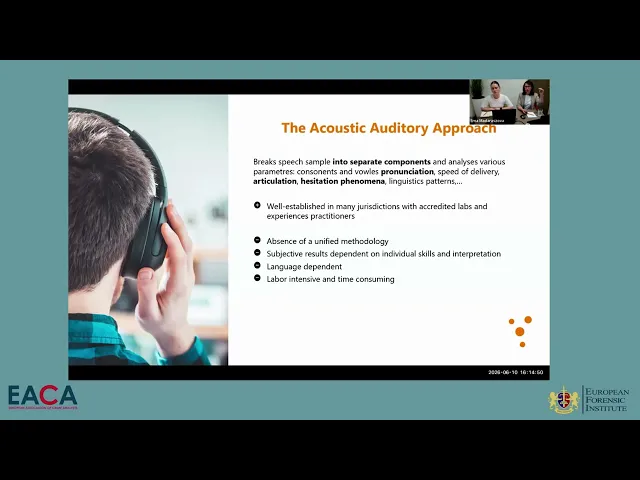
1. The Acoustic-Auditory Approach (Manual)
This traditional method involves a trained forensic expert manually listening to audio files to evaluate linguistics, pronunciation, articulation, hesitations, and unique vocal habits. That’s the auditory part.
The acoustic analysis involves instrumental measurements using spectrograms, formant tracking, and fundamental frequency (F0/pitch) analysis to support and verify those perceptual impressions.
The Pros: It is a deeply entrenched, legally accepted method that has been trusted in courts for decades.
The Cons: It is slow, labor-intensive (a single 1:1 file comparison can take up to 15 hours) and highly language-dependent. If an expert doesn't speak the dialect or language in the recording, they cannot reliably analyze it.
2. The Automatic Approach (AI & Biometrics)
This modern framework leverages Automatic Speaker Recognition (ASR) tools built on deep neural networks. Instead of focusing on what is said or how words are pronounced, it extracts a unique mathematical "voiceprint" that captures acoustic patterns shaped by both the speaker's vocal anatomy and their individual speaking habits.
The Pros: It strips away human bias, handles massive workloads in seconds, works on incredibly short audio clips (down to 7 seconds), and is entirely language-independent. A French audio piece can be successfully matched to a Czech suspect speaker.
The Cons: It requires specialized training to interpret the results accurately, is heavily reliant on input audio quality, and can occasionally be viewed as a "black box" by traditionalists due to the deep learning models involved.
In 2011, only 17% of forensic laboratories said that they used some kind of ASR tool. In 2019, that number had already grown to 50%. Today, the number is likely much higher because forensic laboratories are dealing with more and more audio data. Labs even contact us because they want to use multiple ASR tools to validate and cross-reference their results.

How Forensic AI Evaluation Works: The Role of the Population Set
To prevent automated systems from being a total mystery, professional systems (like Phonexia Voice Guardian) can follow the guidelines set by the European Network of Forensic Science Institutes (ENFSI).
A critical piece of this methodology is the Population Set. It is a reference library of recordings from other speakers that match the demographics of the case (e.g., adult Spanish-speaking males recorded over mobile phones).
Without this statistical background context, a tool can tell you if two voices are similar, but it cannot reliably tell a court how meaningful that similarity is relative to the wider population.
Rather than giving a simple "yes" or "no" answer, automated forensic tools output a Likelihood Ratio (LR) in accordance with the current forensic practice.

What is a Likelihood Ratio?
Likelihood Ratio measures how probable the observed similarity (the "Evidence") is if the suspect is the speaker (Hypothesis 1), compared to how probable it is if the speaker is someone else (Hypothesis 0).
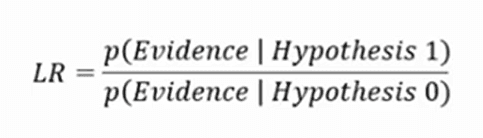
The highter the LR, the strongly the evidence supports the same-speaker hypothesis. For example, an LR of 700 means it is 700 more likely that the speakers are the same than the likelihood that they are different.

Forensic Voice Comparison in Action: Example of a Kidnapping Case
During the webinar, Ema provided a live walkthrough of our Phonexia Voice Inspector, one of the top 3 professional automated voice comparison tools used by global law enforcement agencies and forensic labs.
To show how the software streamlines active investigations, Ema walked through a simulated kidnapping case. Below is a summary of the investigation workflow, but we highly recommend watching the video to see the live, step-by-step Voice Inspector demonstration in action.
1.Inputting the Questioned Audio:
The analyst uploads the unknown recordings — in this case, two separate ransom phone calls received by the victim's parents.
2.Adding the Suspect Reference Profile:
The analyst creates a profile for the primary suspect (a neighbor) and uploads a clean voice sample recorded during his police interrogation of the neighbor.
3.Selecting the Population Set:
An appropriate reference data set is applied — matching the suspect's demographics (adult, British English, male) — to serve as the objective statistical baseline.
4.Reviewing the Likelihood Ratios:
The software compares the files in seconds. For Ransom Call 1, it yields a high Likelihood Ratio (710), indicating strong evidence matching the neighbor. For Ransom Call 2, the ratio drops below 1 (0.001), giving strong evidence that a different second individual was involved in the crime.

5.Generating the Court Report:
With a single click, the tool compiles all results , probability density plots, and verbal ratio translations into a standardized, legal-ready expert opinion template.
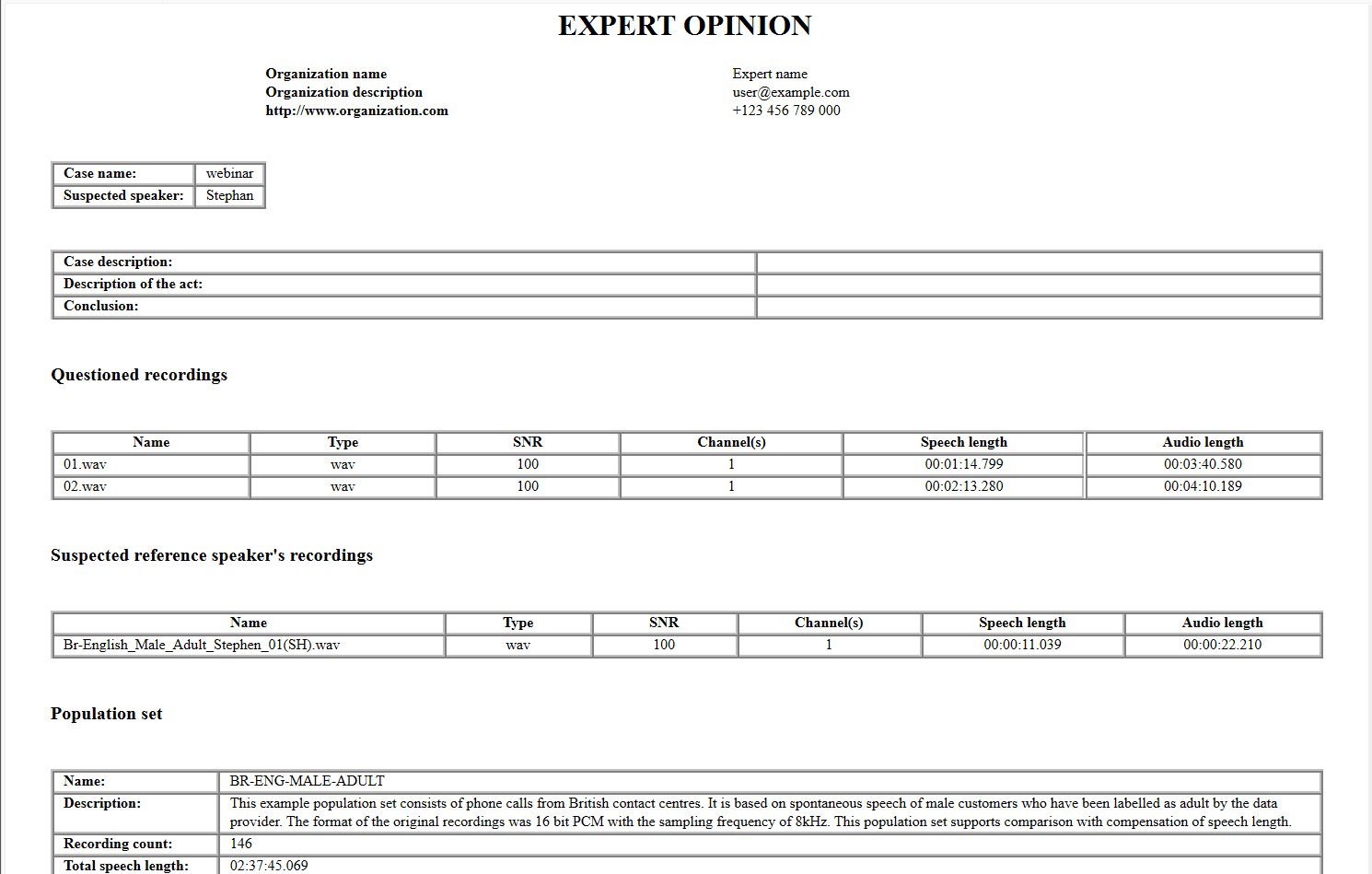
The likelihood ratio is being established as a standard metric in forensic science. It’s now getting recognized across tools, countries, and laboratories because it helps make the results of these systems more acceptable and understandable across forensic communities — and to the people who must make life-and-death decisions based on the evidence provided.

The Path Forward
The webinar wrapped up by emphasizing that automatic voice biometrics exist strictly to serve, assist, and empower forensic voice experts. Far from being a substitute for human expertise, tools like Voice Inspector are designed to make the expert’s highly specialized work faster, easier, and more robust.
They allow investigators to quickly sift through vast amounts of data during active investigations. Ultimately, they provide forensic professionals with reliable, data-driven statistical backing to reinforce and validate their own expert opinions when presenting evidence in court.
If you’d like to see Phonexia Voice Inspector for yourself, feel free to schedule a free live demo with one of our experts.